
This article was originally published on Tom’s Hardware on April 7, 2026 (Italian only).
From the Google Italia experience in 2001 to today’s SMEs: how AI can transform the Italian economic fabric before it’s too late.
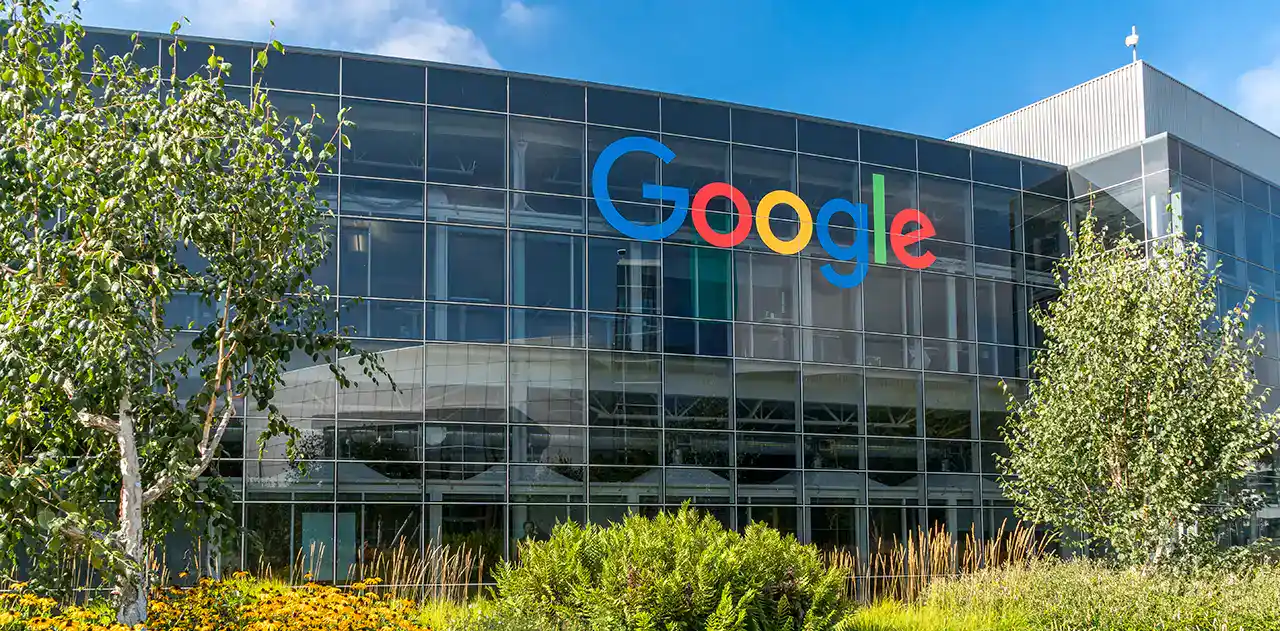
Once upon a time, there was a printer bought with a personal credit card, in an anonymous business center in Milan, by a young man working for what would become one of the most powerful companies in history. It was 2001, and Fabrizio Milano D’Aragona was helping bring Google to Italy alongside a handful of colleagues, in what he himself describes without hesitation as “a full-blown startup.” That pioneering season, lived firsthand by the man who today leads Datrix and actively participates in Assintel’s SME think tank, now offers a privileged vantage point for reading the most urgent challenge facing Italy’s productive fabric: the adoption of artificial intelligence.
Retracing those years means understanding much of what is happening today. 2001 was a paradoxical time: the dot-com bubble was bursting, many companies were desperately trying to exit the digital world, and Google was one of the few survivors. In Italy, the context was even more difficult: internet connections ran through dial-up modems, and talking about measurable digital marketing seemed like science fiction. Yet, right at that moment, D’Aragona and his small team were introducing a revolutionary concept for the era: the ability to know exactly how many people had seen an advertisement and how many had actually clicked on it. Something that television and radio had never been able to offer.
It was that ability to measure results, combined with the exponential growth of online users, that made the difference. But there was a second element, perhaps even more important in the long run: data culture. Google, which was already handling a simply incomparable volume of searches, understood before anyone else that data were not merely numbers to be collected, but information to be interpreted in order to understand trends, interests, and behaviors. An insight that Italian companies, as D’Aragona himself admits, struggled to internalize for many years afterward.
Either Italy catches this train, or we have a very serious problem.
The leap to the present is as disorienting as it is illuminating. What was then a competitive advantage held by a handful of global players is today within reach of any business, including the small and medium-sized Italian enterprises that account for over 80% of national GDP. Yet, according to data from the Politecnico di Milano Observatory, only 7% of Italian SMEs have already introduced artificial intelligence systems. A figure that D’Aragona does not hesitate to call “the measurement of a pathology” — not proof that AI doesn’t work, but the unmistakable signal of a structural delay.
The challenge that Datrix and Assintel’s think tank — which counts over fifty member companies working daily with SMEs — are trying to address is precisely this: translating the potential of artificial intelligence into accessible tools for businesses that cannot afford decade-long planning horizons. Unlike large multinational groups, a small manufacturing firm in the northeast or a professional practice in the south needs to see a measurable return as quickly as possible. And this, from a technical standpoint, is already achievable. The real obstacle, D’Aragona emphasizes, has become something else: regulatory complexity.
The reference is to the European AI Act, which has been progressively entering into force with the stated goal of making Europe a protagonist in artificial intelligence. But the layering of rules — some general, others sector-specific, often overlapping and in partial contradiction with one another — has produced a paradoxical effect: to understand what is and is not permitted, companies must engage specialized consultants who can interpret not only computer code, but also legislative code. An additional cost that falls inevitably on those with the fewest resources.
The parallel with the GDPR, the European regulation on personal data protection, is instructive. When it came into force, many Italian companies experienced it as an unsustainable bureaucratic burden. It took years to absorb. Yet, in the end, that same regulation pushed many businesses to become aware of the value of their own data, transforming a compliance obligation into a competitive opportunity. The risk today is not having that time. Artificial intelligence moves at a speed the GDPR never had, and the margin for recovering any delays narrows with each passing month.
D’Aragona uses a striking image: AI represents the last train of a season of digital transformations that Italy has already partly missed. Cloud computing, for example, was adopted late and still today in an incomplete manner by the country as a whole. If the transition toward artificial intelligence were also mishandled, the consequences would not only be the loss of a growth opportunity, but also the erosion of positions already won. Italian SMEs, often excellent in export supply chains — from manufacturing to agri-food, from fashion to design — risk losing competitiveness against foreign competitors who are integrating AI into production, logistics, and commercial processes with greater speed and resources.
The question of public funding remains open and, in part, unresolved. D’Aragona does not hide his concern: the resources exist, in Europe as in Italy, but they must be directed clearly toward businesses and not only toward large infrastructure projects or the most high-profile sectors. He cites the case of healthcare and hospital research, where public institutions would need dedicated funds to introduce AI systems in diagnostics and clinical research, but find themselves competing for the same resources against very different priorities. In other geographic contexts — and the implicit but unambiguous reference is to the United States and China — these investments are made with a systematic consistency that Europe still struggles to replicate.
What emerges from the conversation with D’Aragona is a clear-eyed and in some ways uncomfortable picture: Italy has the cultural and entrepreneurial tools to navigate this transition, but risks doing so in a fragmented way, without clear coordination and without indicators that concretely measure how many companies are truly changing. Because, as someone who spent years building a data culture notes with bitter irony, the most important data point — how many Italian SMEs are integrating AI into their processes — is not yet being systematically monitored by anyone. And a country that does not measure its own progress will have a hard time correcting course in time.